
Play Chicken Dash Now!
Home → Similar Games
Games Similar to Chicken Dash
Games close to Chicken Dash
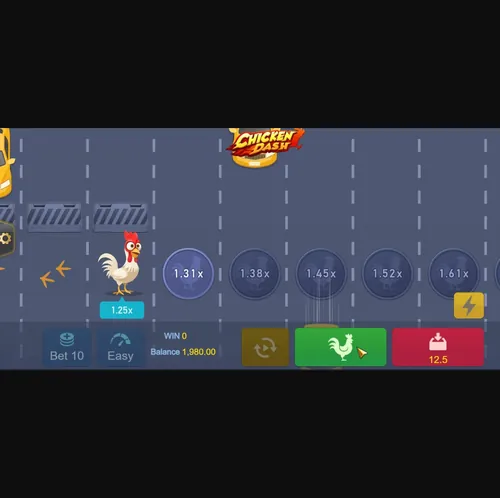
The developer TaDa Gaming created Chicken Dash as a tap-to-advance crash game where players must cash out before the round ends, yielding a theoretical return of 96.85% over extended play sessions compared to other instant games.
Fortune Gems 2 from the same studio uses a low volatility model with a 94.38% RTP and a maximum win cap of 10,000x, offering a steadier pace than the high variance action found in the chicken crossing simulation.
Aviator by Spribe presents a different crash mechanic with a 97.00% RTP and a massive x1,000,000 max win potential, allowing users to compare the risk levels against the three selectable difficulties available in the main title.
Titles with similar maths
Chicken Road from InOut Games features an RTP of 98.00% and a maximum multiplier of x3,608,855, providing a significantly higher ceiling for returns than the 20,659x limit observed in the current game under review.
Fish Road also by InOut Games holds a 96.00% RTP with a top payout of x2,542,251.93, letting analysts calculate how the house edge of 3.15% compares to the slightly tighter margins in these alternative titles.
Rabbit Road shares the exact same maximum win figure of x3,608,855 but operates at a 95.50% RTP, which indicates a higher house advantage than the 96.85% return seen in the primary game being analyzed here.
Same studio alternatives
TaDa Gaming developed Fortune Gems 2 which runs on a 3x3 reel grid with a low volatility setting and a 94.38% RTP, contrasting sharply with the high volatility crash mechanics of the main chicken crossing title.
The studio's portfolio includes Tower Rush by Galaxsys that offers a much lower max win of 100x alongside a 97.00% RTP, showing how mathematical models vary significantly even within the same development ecosystem.
Comparing the 96.85% RTP of Chicken Dash to the 94.38% return of Fortune Gems 2 highlights the difference between instant crash outcomes and traditional grid-based games from the same provider group.
Comparable volatility
Chicken Dash exhibits high volatility meaning payouts are less frequent but potentially larger, reaching up to 20,659x the stake before the round crashes if the player fails to cash out in time.
Fortune Gems 2 provides a low volatility experience with a 94.38% RTP and a 10,000x max win, offering smaller but more regular returns compared to the unpredictable swings inherent in the high-risk crash format.
Tower Rush presents extreme low volatility with only a 100x max win and a 97.00% RTP, ensuring that players face minimal variance in their bankroll changes compared to the sharp drops possible in the main game.
Comparable return figures
The theoretical return of 96.85% for Chicken Dash establishes a house edge of 3.15%, which is slightly lower than the 97.00% RTP found in both Aviator and Tower Rush from competing studios.
Aggregators sometimes cite alternative configurations like 97% or 95.50% for this title, so players should verify the exact RTP active at their operator to ensure accurate calculations of long-term expected value.
Chicken Road offers a superior 98.00% RTP with a massive x3,608,855 max win, while Fish Road sits at 96.00% with a x2,542,251.93 cap, giving users clear benchmarks for comparing return rates across the genre.
Chicken Dash compared with similar titles
| Game | Studio | RTP | Volatility | Max win |
|---|---|---|---|---|
| Chicken Dash | TaDa Gaming | 96.85% | high | 20,659x |
| Tower Rush | Galaxsys | 97.00% | — | 100x |
| Chicken Road | InOut Games | 98.00% | — | x3,608,855 |
| Fish Road | InOut Games | 96.00% | — | x2,542,251.93 |
| Aviator | Spribe | 97.00% | — | x1,000,000 |
| Rabbit Road | InOut Games | 95.50% | — | x3,608,855 |
| Chicken Road 2 | InOut Games | 95.50% | medium | x3,608,855 |
How these titles differ
The theoretical RTP for Chicken Dash stands at 96.85 percent, representing a house edge of 3.15 percent over extended play sessions where variance is significant. This specific return percentage differs from the 97.00 percent RTP found in Dice by Spribe, indicating that Chicken Dash retains slightly more revenue per wagered unit on average. Players should note that some aggregators cite alternative configurations like 95.50 percent, so verifying the active setting before playing remains essential for accurate bankroll management.
Volatility settings vary significantly across crash games, with Chicken Dash offering high volatility to match its tap-to-advance mechanic and potential for large multipliers. In contrast, Chicken Road 2 by InOut Games operates with medium volatility, providing more frequent but smaller wins compared to the erratic nature of the chicken crossing lanes. This structural difference means players seeking steady returns might prefer the other title, while those chasing the maximum multiplier of x20,659 will find Chicken Dash more aligned with their risk appetite.
Feature sets side by side
Chicken Dash allows players to select from three distinct risk levels: Easy, Normal, and Hard, which directly influence the probability of vehicle collisions during the rising multiplier phase. These selectable parameters give users control over their session intensity, unlike Mines where the difficulty is often static or determined by the number of hidden bombs placed initially. The ability to adjust risk manually adds a strategic layer absent in many other instant games that rely purely on random number generation without player input variables.
The Bonus Bag feature in Chicken Dash provides an additional reward mechanism separate from the main cash-out multiplier, adding depth to each round of gameplay. While Plinko also offers multiple payout tiers based on ball landing positions, it lacks the interactive tap-to-advance progression that defines the chicken crossing experience. This unique combination of manual pacing and bonus rewards distinguishes the game from simpler crash variants like Plane Game by Spribe, which focuses solely on exponential growth without thematic bonuses.
Payout ceilings compared
The maximum win cap for Chicken Dash is set at 20,659 times the initial stake, achievable only if the player successfully cashes out before the highest possible multiplier crashes. This ceiling is substantially lower than the x3,608,855 maximum win offered by Chicken Road 2, highlighting the trade-off between massive jackpot potential and more moderate but consistent high-volatility payouts. Players aiming for life-changing sums might look elsewhere, but those comfortable with substantial yet realistic gains will find this limit appropriate for high-risk strategies.
Bet ranges compared
However, the presence of a 300 percent welcome bonus up to 2,000 euros plus 100 free spins suggests the platform supports varied bankroll sizes for new players entering the market. Without explicit betting constraints, analysts cannot determine if the game accommodates micro-stakes or requires higher minimum wagers, unlike Dice which may have defined low-entry thresholds.
Which suits which player
Players who enjoy manual control over risk exposure will appreciate the three selectable levels in Chicken Dash, as they allow precise adjustment of collision probabilities during the ascent. This hands-on approach contrasts sharply with Spaceman by Pragmatic Play, where the multiplier rises automatically based on fixed algorithms without user intervention until the cash-out moment. The interactive nature of tapping to advance makes it ideal for those who want to feel involved in determining the outcome rather than passively watching a curve rise.
Trying alternatives in demo
TaDa Gaming develops Chicken Dash with a maximum multiplier of x20,659, which defines the upper limit for potential returns in any single session. This high ceiling requires players to manage risk carefully because the volatility is classified as high, meaning large swings are standard rather than exceptional. Consequently, testing the tap-to-advance mechanic in demo mode helps users understand the timing required before the round crashes.
The theoretical return to player stands at 96.85%, calculated over millions of rounds where the house edge remains fixed at 3.15%. Aggregators sometimes cite alternative RTP configurations like 97% or 95.50%, indicating that operators can adjust this parameter across different platforms. Players should verify the specific setting on their chosen site because the actual long-term expectation varies directly with this configurable percentage.
Why variety helps bankroll
Fortune Rabbit by PG Soft offers a medium volatility profile with a max win of 5000x, contrasting sharply with the high variance of Chicken Dash. This difference allows players to balance their portfolio by mixing stable, lower-risk titles with the extreme upside potential of the crash genre. Such diversification prevents rapid bankroll depletion during dry spells common in high-volatility games while maintaining access to larger multipliers.
Studios worth knowing
TaDa Gaming specializes in instant crash mechanics where players cash out before a vehicle hits the chicken, creating tension without traditional reel structures. Their design philosophy focuses on simple tap-to-advance controls that appeal to mobile users seeking quick, engaging sessions with immediate feedback loops. Understanding this developer’s approach helps players anticipate the user interface and risk management tools available in their broader catalog of similar titles.
Newer releases in the genre
The current market features various instant games with adjustable risk levels, yet Chicken Dash remains distinct due to its specific three-lane traffic theme. While other studios release frequent updates, TaDa Gaming maintains a focused library where each title emphasizes precise timing over complex bonus rounds. This simplicity ensures that new releases in the sector often follow the established pattern of rising multipliers and sudden crashes.
Picking your next title
A 300% welcome bonus up to €2,000 plus 100 free spins provides substantial initial capital for exploring different game providers and mechanics. Players can use these funds to test the Easy, Normal, and Hard risk settings in Chicken Dash without risking their own deposits immediately. This bonus structure encourages experimentation with different cash-out strategies while minimizing the financial impact of early mistakes in high-volatility environments.
DemoRTP & VolatilityHow to PlayAuto CashoutStrategyBonusesMobileDownload & AppMax WinSimilar GamesReviewFAQSitemap
Chicken Dash 2026